
Services

AR Design UX and Innovation supports the development of a product from concept to industrialization.
Our services are all complementary; we can support you throughout the various phases of product aesthetic design, ergonomic analysis, environmental considerations, definition of physical and graphic interfaces, and even prototyping and user testing. Incorporating these different components early in the concept development phase allows us to improve quality and reduce development time. By combining sustainability and user-centered design, we offer a comprehensive and innovative strategy for designing physical and digital product and service experiences.

PRODUCT DESIGN
The first interaction we have with a product is through the visual language it offers us; that is why its design must serve innovation.
Product design is about creating useful, usable, and desirable products, taking into account:
user needs (ergonomics, uses, user journeys),
technical constraints (materials, technologies, industrial processes),
business objectives (costs, positioning, differentiation),
and the societal context (sustainability, accessibility, safety, regulations).
It is therefore a multidisciplinary process that combines creativity, analysis, engineering and user-centered methods to produce a coherent, efficient and viable product.
Typical stages of a product design study:
Research, field observations, needs and market analyses.
Value proposition and functional requirements.
Ideation and concept development (workshop facilitation, brainstorming)
Definition of aesthetic visual codes (shapes, colors, graphics)
Creating prototypes and user validation
Product design (CAD, drafting)
Adjustments, iterations, and preparation of the manufacturing file
Industrialization
HUMAN FACTORS
Product ergonomics:
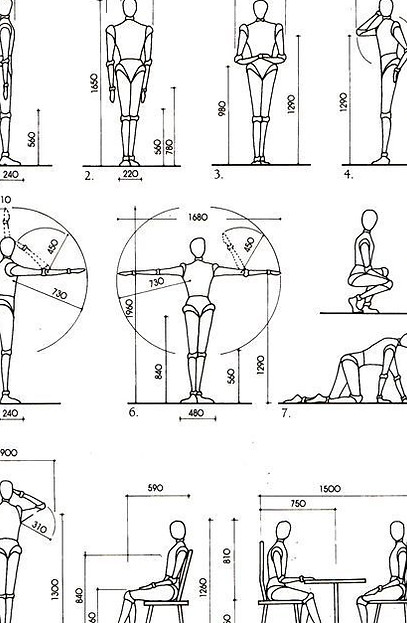
Humans are at the center of the use of the products and services we offer; it is important to understand the anthropomorphic, cognitive, and socio-organizational factors of our customers.
Product ergonomics allows us to analyze the relationship between humans and their tools, machines and environments in order to optimize conditions of use, adapting the product to the user to improve comfort, safety and efficiency.
Medical Devices:
Regarding medical devices, the ISO 14971 risk management standard requires a usability analysis (IEC 62366-1) to be performed. The purpose of this method is to analyze potential errors related to the intended use in order to anticipate and mitigate them.
The process of a Human Factors service delivery:
Develop a procedure for the usability methodology related to the quality system and risk management.
Define the framework (intended uses, usage scenarios, potential risks...)
Preparation of the usability engineering plan (URRA, Report, Usability Engineering Report)
Management and planning of Formative and Summative testing campaigns (Usability Test Plan, Test Protocols, Facilitation, Usability Test Report).

ECODESIGN
Our health is intrinsically linked to the health of our environment.
This is why taking into account social and environmental issues as early as possible in product development allows us to analyze and reduce the impacts on our ecosystem.
Eco-design is an accelerator for innovation; it allows us to do more with less. By reducing the material of a product by a few grams, for example, we can reduce costs (manufacturing, transport, packaging...) and their associated environmental impacts.
Analyzing the life cycle of our products/services allows us to understand their impacts at each stage; during the extraction of raw materials, manufacturing, distribution, use and end of life.
Typical process of an ecodesign study:
Analyze:
Definition of the functional unit
Life cycle assessment (LCA) or pre-diagnosis
Improve :
Ideation and problem-solving (workshop facilitation, brainstorming)
Comparison and improvement tools
Definition of "ECO" objectives
Design and prototyping
To enhance:
Comparative LCA and valuation of gains
Environmental communication
UX/UI Design
User Interface (UI) design is closely related to, but distinct from, User Experience (UX) design. UX defines the user journey and meaning, while UI defines the form and visual perception.
User Experience (UX):
UX design defines products or services that are useful, usable, accessible, desirable, and enjoyable.
It focuses on the overall experience of a user, from their first contact to regular use of the product.
UX design encompasses:
understanding the needs, motivations and contexts of use of users,
the design of efficient and seamless journeys,
the creation of clear information structures,
Optimizing ergonomics and ease of use,
validation through user testing.
The user interface (UI):
UI design involves designing the visual appearance, structure, and graphic interaction of a digital product (application, website, software, embedded system, etc.).
The UI is the visible and aesthetic part of the interface with which the user interacts; this includes:
graphic design
the colors
the police
the illustrations
the product/brand identity
UX structures the experience and UI shapes the interface.


STRATEGY & INNOVATION
AR offers an approach that uses design methods to guide, transform, and innovate at the organizational level.
It is not just about designing a product, but about structuring a vision, creating new opportunities, reinventing existing models and guiding strategic decision-making.
This method allows:
to analyze and anticipate future needs,
to identify new value drivers,
to align the solutions with the company's overall strategy,
to explore possible scenarios for building innovation,
to reduce risks in complex projects.
to define a clear and shared vision for the future of the product, service or organization.
Strategic design and innovation aims to:
Identify innovation opportunities (uses, technologies, business).
Supporting the transformation by structuring actionable strategies.
Reducing uncertainty through experimentation, prototyping, and analysis.
Promote alignment between users, business, and technical feasibility.
CONSULTING & TRAINING
Our UX Design and Innovation Consulting & Training service supports organizations in the design of high value-added products, services and experiences.
We combine expertise in user research, experience design, human-centered and environmental innovation to help teams progress, transform and create truly impactful solutions.
The goal is to help companies better understand their users, structure innovative solutions, and develop a sustainable design culture through:
operational advice,
facilitating creative workshops and brainstorming ideas
raising awareness of eco-design
specialized training on medical devices and usability
the development of agile methods for product development
the implementation of procedures and tools specific to product design
Courses, lectures and knowledge sharing in higher education institutions and universities.
